Lake Washington Docks: Permits, Repairs and What Buyers Should Know
August 20, 2026
August 20, 2026
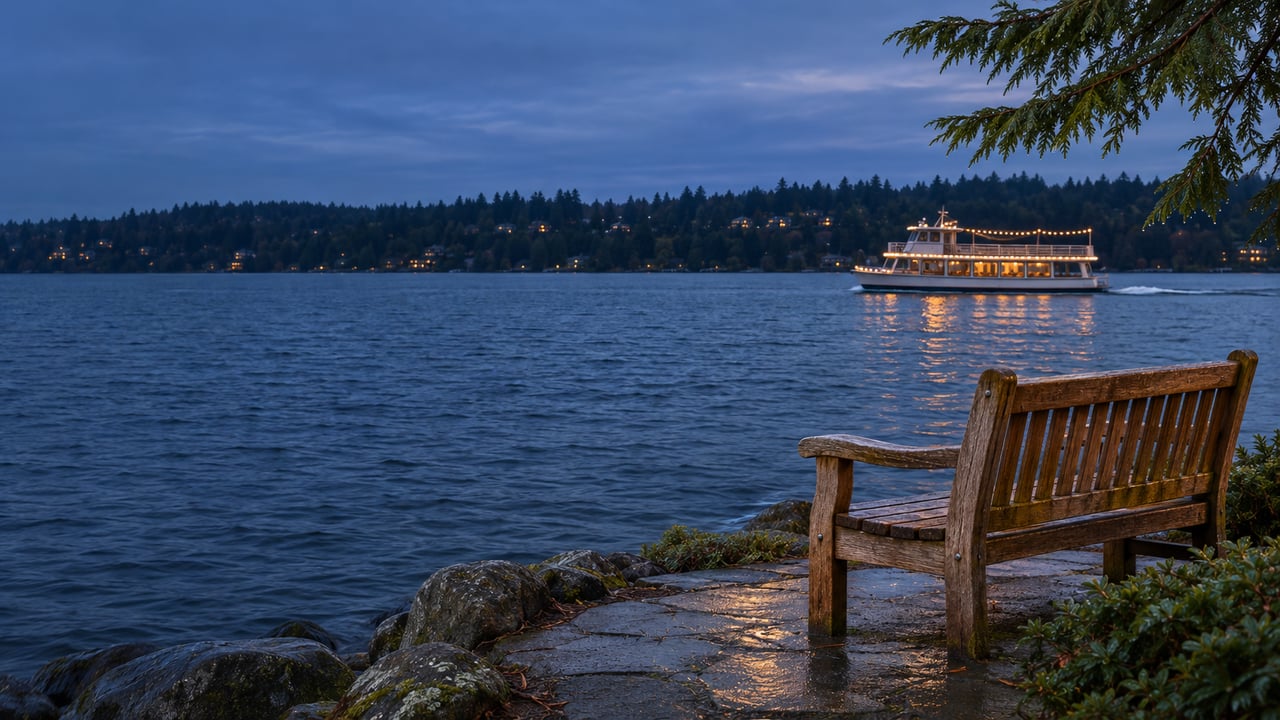
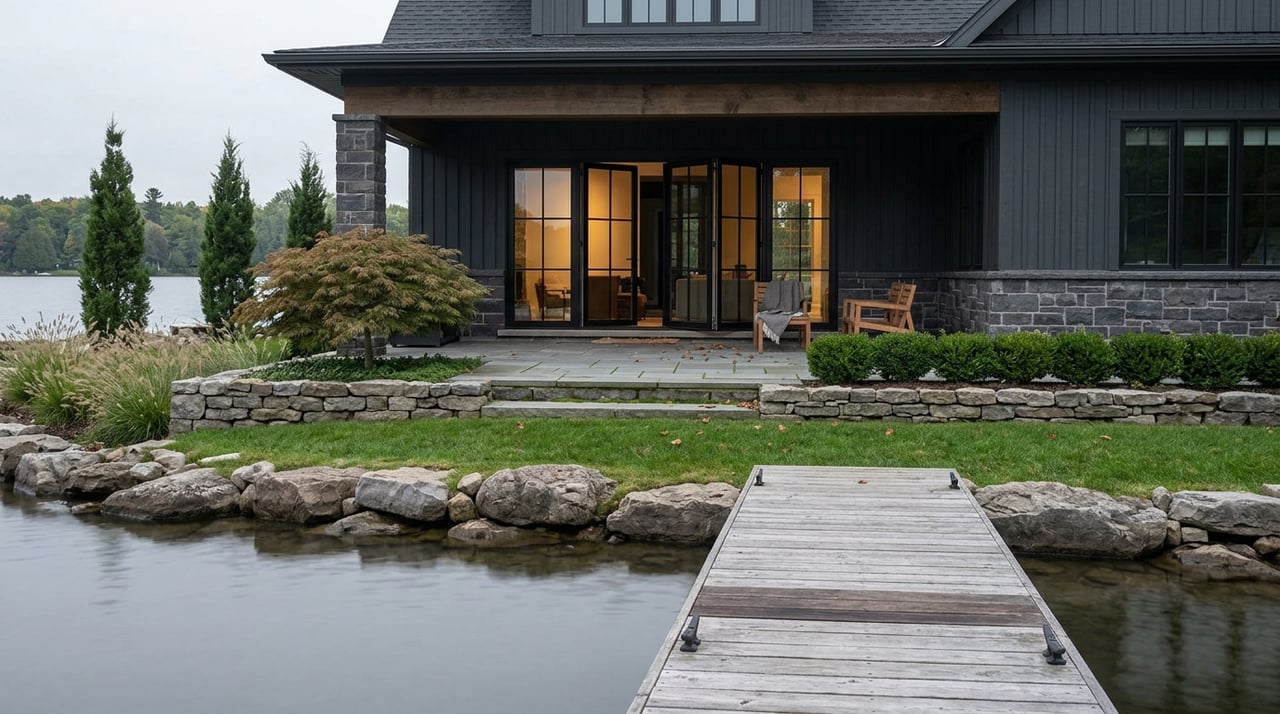
A waterfront listing on Lake Washington's Pritchard Island enclave in Seattle is currently on the market advertising a private dock, a covered hydraulic boat lift, and what the listing calls grandfathered offshore mooring pilings. That single word, grandfathered, is doing more legal work than most buyers reading the listing will register.
This is not a quirk of one listing. It is the condition of nearly every private dock on Lake Washington, and it just became more current than it has been in years.
King County's Shoreline Master Program has, for a long time, treated a private dock built solely to serve one single-family home as something less than a default right. Under the program, a pier or dock for the sole use of a single-family residence is not an outright permitted use. Joint-use docks, shared piers, or floating moorage buoys are the preferred alternative, and a private single-family dock is only allowed when those shared options are not workable on that particular shoreline.
That policy has shaped Lake Washington's shoreline for decades, which is exactly why so many existing docks were built under older, looser permits and now sit as legally nonconforming structures. They can stay. They cannot always be rebuilt the same way.
What changed is the currency of the document that policy lives in. The Washington State Department of Ecology approved a locally-initiated amendment to King County's Shoreline Master Program on April 28, 2026, with an effective date of May 12, 2026, fourteen days after the county received formal notice. Ecology's own notice describes the amendment as keeping the county's program current with changes to the state Shoreline Management Act, the comprehensive plan, and local circumstances. Ecology planned to publish its final notice of action in the Seattle Times on May 19, 2026, which under state law opened a sixty-day window for anyone to appeal to the Growth Management Hearings Board. That window closed in mid-July, weeks before this article was written. Any Lake Washington transaction closing this fall is operating under the refreshed program, not a pending one.
None of that resets the dock preference itself. It resets the clock on the document a title company, a shoreline permit reviewer, or an opposing attorney will point to first.
The shoreline jurisdiction on Lake Washington does not stop at the water's edge. King County's critical area regulations establish a buffer of between 115 and 165 feet from the ordinary high water mark, a distance that replaced smaller setbacks used under earlier rules. That buffer covers new construction, additions, and many accessory structures near the water, not only docks. A buyer evaluating a waterfront lot for a future addition, guest house, or expanded patio needs to measure that buffer before assuming the buildable envelope matches the lot line.
Mercer Island's Luther Burbank Park sits on three quarters of a mile of Lake Washington shoreline, and its public docks offer the clearest documented picture of what a shoreline project on this lake requires today. The docks were built in 1974. A 2020 underwater survey found rot in structural members and loose bracing, with less than five years of service life remaining. The city has been coordinating with eight federal, state, and local agencies since 2022 to secure more than twenty separate permits and approvals, a process the city itself describes as one of the most complex park redevelopment projects on Mercer Island in decades. The project only recently reached the construction advertising stage, and once a contractor is under contract, the work itself is expected to take fifteen to eighteen months.
This is a public project with public funding and a dedicated project team, and it still took four years from design start to construction bid just for docks. A private owner replacing a residential dock on the same lake faces a scaled-down version of the same agency stack: county shoreline review, state fish and wildlife sign-off, and potentially federal review, without a city staff dedicated to running it.
There is a streamlined path for some of this work. King County's Restoration and Permitting Program, known as RAP, was built in 2017 by the Army Corps of Engineers, the National Marine Fisheries Service, King County, the Washington Department of Fish and Wildlife, and the Muckleshoot and Snoqualmie tribes specifically for pier and shoreline projects on Lake Washington and Lake Sammamish. It bundles the minimization and restoration requirements from multiple agencies into one set of design standards, with a conservation fee and credit system that rewards on-site habitat measures.
A real case from Mercer Island's east Lake Washington shoreline shows how this plays out for a private homeowner. King County removed nineteen creosote-treated pilings supporting a solid-decked pier at a privately owned single-family property. The pilings were structurally sound with fifty to a hundred years of service life left. The landowners chose to replace the entire dock anyway, and the National Marine Fisheries Service required the replacement to be a smaller, fully RAP-compliant pier. Public funding covered removal and disposal of the old creosote pilings. Every other demolition and construction cost was privately funded.
The lesson is not that RAP is free. It is that even the fast lane on this lake tends to end in a smaller footprint than the structure it replaced.
National marine-contractor pricing guides current as of mid-2026 put freshwater bulkhead installation at roughly $150 to $650 or more per linear foot, with treated timber and riprap at the low end, marine-grade vinyl in the middle, and steel or concrete at the top. Full residential seawall projects average $15,000 to $60,000. A structural engineer's design consult typically runs $2,000 to $3,000.
| Line item | Typical range (2026 contractor guides) |
|---|---|
| Freshwater bulkhead, per linear foot | $150 to $650+ |
| Full residential seawall project | $15,000 to $60,000 |
| Marine engineer design consult | $2,000 to $3,000 |
| Generic permit fee line item | $100 to $400 |
That bottom line is where the national guides understate the Lake Washington reality. A $100 to $400 permit fee assumes one agency and one form. A Lake Washington dock or bulkhead project can touch a King County shoreline exemption or substantial development review, a Washington Department of Fish and Wildlife Hydraulic Project Approval, a Department of Ecology sign-off, and, if the tidelands are state-owned, a Department of Natural Resources aquatic land lease negotiated on top of all of it. The Lake Washington and Cedar and Sammamish watershed's own shoreline permitting guidance lists the local jurisdiction, Fish and Wildlife, Ecology, and the Army Corps as the standard players a shoreline owner should expect to contact, well before construction pricing enters the conversation.
Before writing an offer on a Lake Washington waterfront property, or before listing one:
None of this shows up in listing photos. All of it shows up in an inspection contingency, an appraisal note, or a negotiation once a buyer's engineer starts asking questions the seller was not expecting.
Can an old dock be rebuilt in the exact same footprint without going through the joint-use analysis? Not automatically. King County's regulations distinguish between maintaining a legally existing structure and constructing a new one, and a rebuild can be treated as new construction depending on scope, which reopens the joint-use preference question.
Who should get the first call? For most Lake Washington properties, that is the county's shoreline permitting staff, followed by the Washington Department of Fish and Wildlife if any in-water work is involved. Starting there, before a contractor gives a price, avoids paying for a design that the agencies will send back.
A dock is often the feature that sells a Lake Washington property. It is rarely the feature a buyer's team has fully priced. KLD Real Estate Group works Eastside waterfront transactions where shoreline permit history, not just square footage, decides what a property is actually worth at the negotiating table. If you are evaluating a Lake Washington waterfront purchase or preparing one to list, schedule your private consultation before the inspection period starts the clock.
This article is general information, not legal, tax or financial advice. Consult a qualified professional about your situation.
At Kritsonis Lindor Real Estate Group, we understand that your home is more than just a property; it's a place where memories are made. That's why we're committed to providing you with a seamless and personalized real estate experience. Contact us today to learn more about how we can help you achieve your real estate goals.
Stay up to date on the latest real estate trends.