Seattle Living With Easy Access to the Eastside
July 2, 2026
July 2, 2026
If you want the energy of Seattle without losing easy access to Bellevue, Mercer Island, or Redmond, you have more options now than you did even a year ago. Cross-lake travel is no longer just about choosing the right bridge at the right time. With the 2 Line now crossing Lake Washington, you can build daily life around rail, driving, park-and-ride convenience, and even waterfront access on both sides of the lake. Let’s dive in.
Seattle has always had a strong connection to the Eastside, but Lake Washington shapes how that connection works day to day. For years, most people thought about cross-lake access mainly in terms of driving across SR 520 or I-90.
That changed on March 28, 2026, when Sound Transit opened the Crosslake Connection and completed the 2 Line crossing of Lake Washington. The line links Seattle’s International District/Chinatown with Judkins Park, Mercer Island, Bellevue, and Redmond Technology Station. It also gives you a new way to think about where to live if your work, routines, or free time span both sides of the lake.
If you live in Seattle and spend regular time on the Eastside, the biggest shift is simple: rail is now part of the conversation in a much bigger way. According to Sound Transit, the 2 Line runs about every 8 minutes during peak periods and about every 10 to 15 minutes off-peak.
Service also covers long hours, with trains running roughly from 5 a.m. to 1 a.m. Monday through Saturday and 6 a.m. to midnight on Sundays. That kind of schedule matters if your day starts early, runs late, or includes more than a standard commute.
The East Link corridor is 14 miles long and includes 10 stations from Seattle’s International District to Judkins Park, across I-90 to Mercer Island and South Bellevue, then through downtown Bellevue, the Bel-Red area, and on to Redmond Technology Station.
For many buyers and movers, that means you can now look at Seattle living through a wider lens. Instead of focusing only on driving times, you can consider how close you are to a station, how often you need Eastside access, and whether rail could take pressure off your weekly routine.
Mercer Island stands out in this new setup. Sound Transit places Mercer Island Station in the center of I-90 near the Mercer Island Park-and-Ride and Town Center, with station access from 77th Avenue SE and 80th Avenue SE.
It is also a practical transfer point. Sound Transit lists travel time from Mercer Island to Bellevue Downtown at 10 minutes, and Mercer Island’s park-and-ride has 447 spaces, according to the city. If you like flexibility, that mix of rail access and park-and-ride capacity is worth paying attention to.
Even with rail in place, many Seattle-area households will still drive at least part of the time. If that is your reality, it helps to understand the basic role of each corridor.
SR 520 is the key Seattle-to-Eastside route for Bellevue, Redmond, and nearby destinations, and WSDOT describes it as an important commute and economic corridor linking Seattle, Eastside suburbs, I-5, and I-405. I-90 remains the other core cross-lake route and now carries both road traffic and the rail connection.
One practical difference is tolling. SR 520 is tolled in both directions, with current weekday Good To Go! rates ranging from $1.35 overnight to $4.90 during peak windows.
WSDOT also notes that Pay By Mail is $2 higher than the pass rate, and Pay By Plate adds 25 cents per trip on top of the pass rate. If you cross often, those costs can become a real part of your monthly budget.
Cross-lake driving is rarely one-size-fits-all. WSDOT’s live travel-time feed on June 8, 2026 showed Seattle to Bellevue at 10 minutes via SR 520 and 10 to 11 minutes via I-90 at that point in time.
That snapshot is helpful, but it does not mean every trip will look the same. WSDOT’s I-90 dashboard also shows that commuters between Bellevue and Seattle experienced severe congestion in 2023, with speeds of 36 mph or less, and in 2022 that happened on 23.3% of days at 8:35 a.m. The main takeaway is that route choice, time of day, and mode of travel all matter.
Rail is a big addition, but it is not the whole network. Bus routes and park-and-ride locations still matter, especially if your daily pattern does not begin or end right next to a station.
That is especially true during this transition period, as service is being reorganized around the 2 Line. If you are planning where to live, it helps to think in terms of connections, not just one single route.
Sound Transit’s 2026 service plan says Route 550 between Bellevue and Seattle will be discontinued in fall 2026. Riders heading to downtown Seattle, Judkins Park, Mercer Island, Bellevue, and beyond will instead use the 2 Line.
The same service plan says riders who use Bellevue Way stops can transfer to the 2 Line at Bellevue Downtown or South Bellevue. It also says Route 556 will be improved on the Eastside.
A few current routes are still important reference points:
If your week includes office days, airport runs, client meetings, or family logistics on both sides of the lake, these layered options can make Seattle living more workable than many people assume.
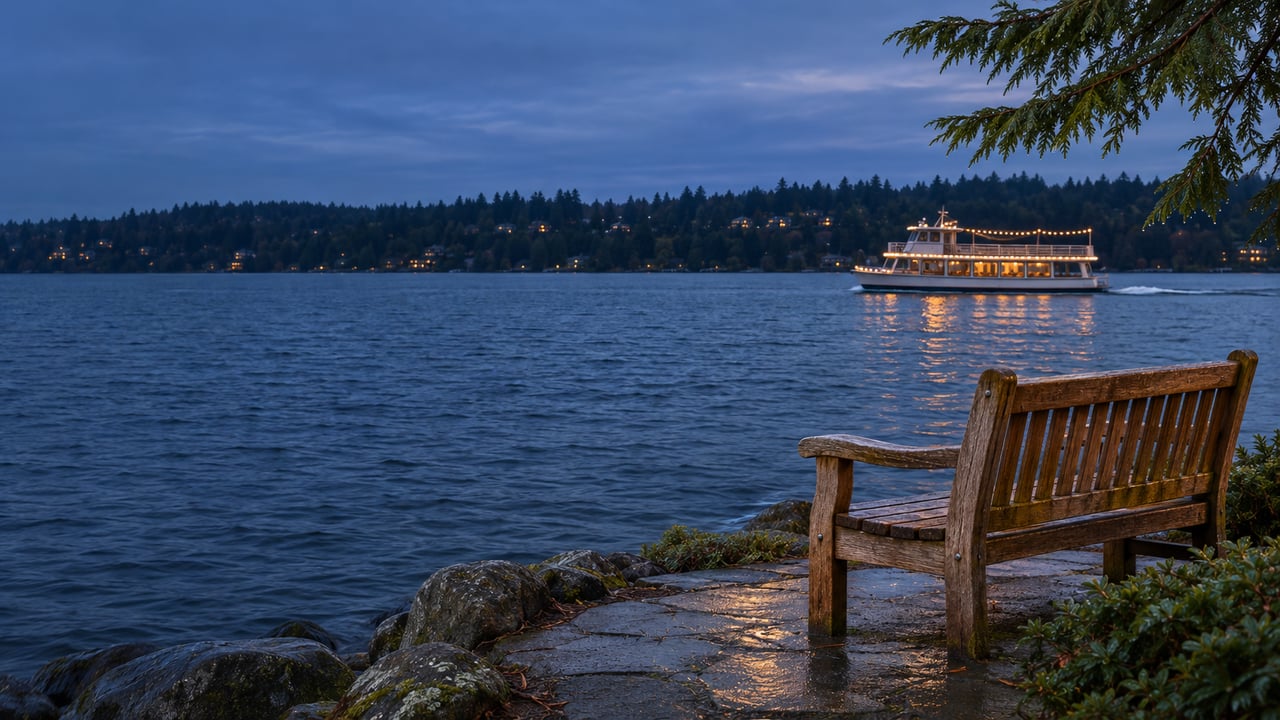
Easy access to the Eastside is not only about commuting. One of the biggest advantages of living in Seattle near this corridor is that Lake Washington is both a transportation barrier and a lifestyle asset.
That matters if you want a home base in Seattle while staying connected to the waterfront experience that defines so much of Eastside living. The lake supports recreation, boating, and public shoreline access on both shores.
Seattle Parks says the city has seven motorized boat ramps across Puget Sound, Lake Washington, and the Ship Canal. It also notes that permits are required at the five motorized launches on Puget Sound and Lake Washington.
For a more casual lake day, Seward Park includes hand-carry boat launches. Seattle Parks also identifies Andrews Bay at Seward Park as Seattle’s only designated short-term anchorage.
On the Eastside, public access remains part of the draw. Bellevue’s Meydenbauer Bay Park offers public water access and a hand-carry boat launch.
Kirkland Marina Park includes a boat launch, moorage facilities, and 82 uncovered moorage slips year-round. Mercer Island also provides a public boat launch for a fee.
If boating is part of your lifestyle, it helps to know that access and regulation go together. Seattle’s boat-launch guidance notes speed restrictions in city waters, including low-speed zones near Lake Washington shorelines.
That practical detail matters because it reflects how people actually use the lake. It is scenic, active, and highly regulated in ways that can affect how you plan your time on the water.
If you are searching for a home in Seattle with easy Eastside access, your decision is now about more than distance on a map. You should think about which cross-lake corridor fits your routine best and whether you want rail access, direct bridge access, or a combination of both.
For some buyers, being able to reach the 2 Line easily will be the top priority. For others, fast access to SR 520 or I-90 may matter more, especially if driving remains part of the daily routine.
As you compare Seattle living options, it can help to ask:
Those answers can shape not just your commute, but the kind of lifestyle your next home supports.
Cross-lake living sounds simple until you start comparing real neighborhoods, real routes, and real daily patterns. A home that looks convenient on paper can feel very different depending on whether you rely on the 2 Line, prefer I-90, or need regular SR 520 access.
That is where local context matters. When you understand how people actually move between Seattle and the Eastside, you can make a more confident decision about location, lifestyle, and long-term fit.
If you are weighing Seattle living with Eastside access, KLD Real Estate Group can help you evaluate the tradeoffs with a local, practical perspective.
At Kritsonis Lindor Real Estate Group, we understand that your home is more than just a property; it's a place where memories are made. That's why we're committed to providing you with a seamless and personalized real estate experience. Contact us today to learn more about how we can help you achieve your real estate goals.
Stay up to date on the latest real estate trends.